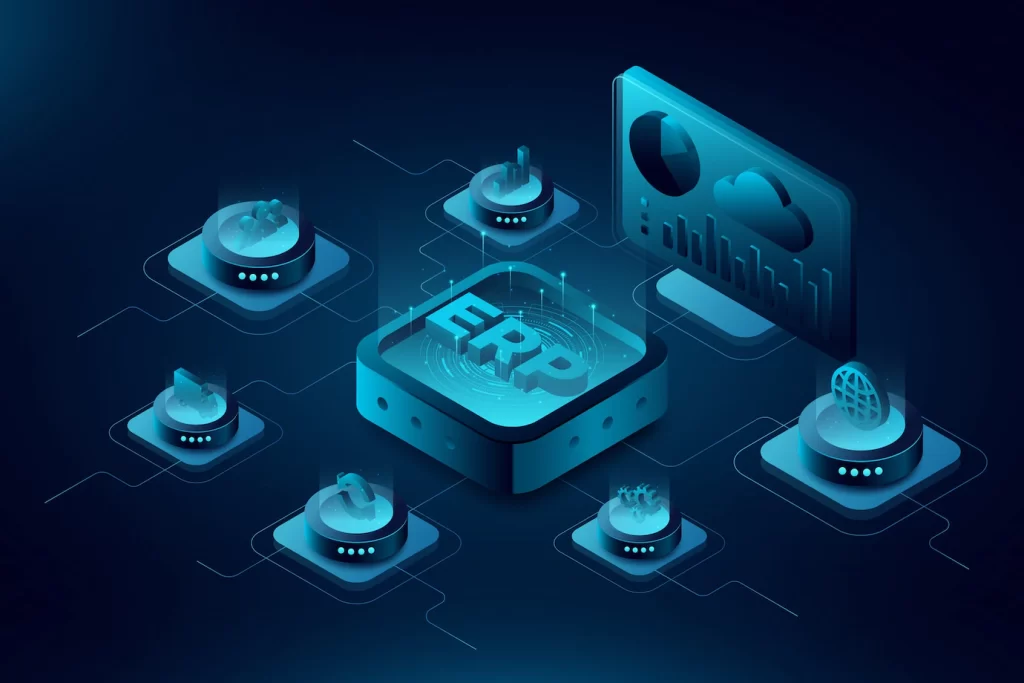
The term “Enterprise Resource Planning” (ERP) refers to a class of software that businesses use to oversee routine operations including accounting, purchasing, project management, risk management, and compliance.
What business benefits does ERP provide?
By giving businesses with multidimensional views of information and control, ERP systems help them gain a better understanding of their operations. Regardless of the organization’s size, having access to this important data enables them to maintain a competitive edge in their sector and make
important business decisions. Business owners and executives may automate and streamline time-consuming back-office processes, support staff in becoming more effective and successful in their positions and gain real-time visibility into the inner workings of their operations with the implementation of an effective ERP system.
ERP may enhance a company’s operational performance by identifying the most effective methods for resource planning, scheduling, and productivity enhancement. Another illustration of an ERP system is one that enables users to access data from anywhere using their mobile devices. They can receive prompt responses to inquiries regarding inventory, production schedules, order shipments, and arriving supplies while they are out in the field speaking with clients or potential customers.
For ERPs like SAP, Oracle, JD Edwards and other, we at lensys provide a full variety of services, solutions, and technologies to maintain, secure, and enhance performance? The cloud infrastructure includes Microsoft Azure, Amazon AWS, and others. The majority of the time, cloud ERP software offers the same or better capabilities as on-premises systems without the majority of drawbacks, like upfront licencing fees, because it is hosted by the ERP vendor and offered as a service to enterprises.